вторник, 3 апреля 2012 г.

Проект Жданова Романа

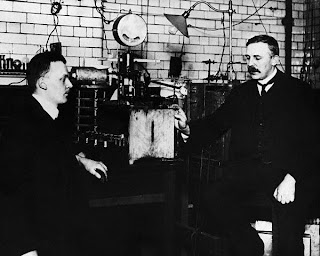
 Ernest Rutherford
Biography

Ernest Rutherford was born on August 30, 1871, in Nelson, New Zealand, the fourth child and second son in a family of seven sons and five daughters. His father James Rutherford, a Scottish wheelwright, emigrated to New Zealand with Ernest's grandfather and the whole family in 1842. His mother, née Martha Thompson, was an English schoolteacher, who, with her widowed mother, also went to live there in 1855.
 Ernest received his early education in Government schools and at the age of 16 entered Nelson Collegiate School. In 1889 he was awarded a University scholarship and he proceeded to the University of New Zealand, Wellington, where he entered Canterbury College*. He graduated M.A. in 1893 with a double first in Mathematics and Physical Science and he continued with research work at the College for a short time, receiving the B.Sc. degree the following year.
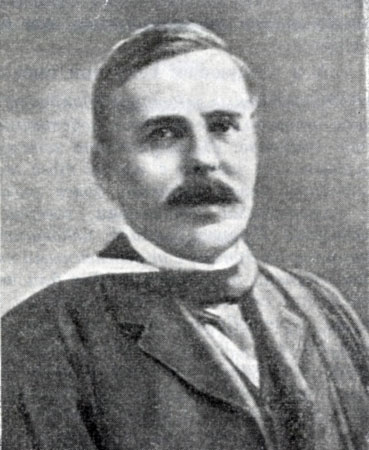
 That same year, 1894, he was awarded an 1851 Exhibition Science Scholarship, enabling him to go to Trinity College, Cambridge, as a research student at the Cavendish Laboratory under J.J. Thomson. In 1897 he was awarded the B.A. Research Degree and the Coutts-Trotter Studentship of Trinity College. An opportunity came when the Macdonald Chair of Physics at McGill University, Montreal, became vacant, and in 1898 he left for Canada to take up the post. Rutherford returned to England in 1907 to become Langworthy Professor of Physics in the University of Manchester, succeeding Sir Arthur Schuster, and in 1919 he accepted an invitation to succeed Sir Joseph Thomson as Cavendish Professor of Physics at Cambridge.
 He also became Chairman of the Advisory Council, H.M. Government, Department of Scientific and Industrial Research; Professor of Natural Philosophy, Royal Institution, London; and Director of the Royal Society Mond Laboratory, Cambridge. Rutherford's first researches, in New Zealand, were concerned with the magnetic properties of iron exposed to high-frequency oscillations, and his thesis was entitled Magnetization of Iron by High-Frequency Discharges. He was one of the first to design highly original experiments with high-frequency, alternating currents. His second paper, Magnetic Viscosity, was published in the Transactions of the New Zealand Institute (1896) and contains a description of a time-apparatus capable of measuring time intervals of a hundred-thousandth of a second. On his arrival at Cambridge his talents were quickly recognized by Professor Thomson. 
During his first spell at the Cavendish Laboratory, he invented a detector for electromagnetic waves, an essential feature being an ingenious magnetizing coil containing tiny bundles of magnetized iron wire. He worked jointly with Thomson on the behaviour of the ions observed in gases which had been treated with X-rays, and also, in 1897, on the mobility of ions in relation to the strength of the electric field, and on related topics such as the photoelectric effect.
In 1898 he reported the existence of alpha and beta rays in uranium radiation and indicated some of their properties. In Montreal, there were ample opportunities for research at McGill, and his work on radioactive bodies, particularly on the emission of alpha rays, was continued in the Macdonald Laboratory. With R.B. Owens he studied the "emanation" of thorium and discovered a new noble gas, an isotope of radon, which was later to be known as thoron. 
Frederick Soddy arrived at McGill in 1900 from Oxford, and he collaborated with Rutherford in creating the "disintegration theory" of radioactivity which regards radioactive phenomena as atomic - not molecular - processes. The theory was supported by a large amount of experimental evidence, a number of new radioactive substances were discovered and their position in the series of transformations was fixed. 
Otto Hahn, who later discovered atomic fission, worked under Rutherford at the Montreal Laboratory in 1905-06. At Manchester, Rutherford continued his research on the properties of the radium emanation and of the alpha rays and, in conjunction with H. Geiger, a method of detecting a single alpha particle and counting the number emitted from radium was devised. In 1910, his investigations into the scattering of alpha rays and the nature of the inner structure of the atom which caused such scattering led to the postulation of his concept of the "nucleus", his greatest contribution to physics. According to him practically the whole mass of the atom and at the same time all positive charge of the atom is concentrated in a minute space at the centre. 
In 1912 Niels Bohr joined him at Manchester and he adapted Rutherford's nuclear structure to Max Planck's quantum theory and so obtained a theory of atomic structure which, with later improvements, mainly as a result of Heisenberg's concepts, remains valid to this day. 
In 1913, together with H. G. Moseley, he used cathode rays to bombard atoms of various elements and showed that the inner structures correspond with a group of lines which characterize the elements. Each element could then be assigned an atomic number and, more important, the properties of each element could be defined by this number.
 In 1919, during his last year at Manchester, he discovered that the nuclei of certain light elements, such as nitrogen, could be "disintegrated" by the impact of energetic alpha particles coming from some radioactive source, and that during this process fast protons were emitted. Blackett later proved, with the cloud chamber, that the nitrogen in this process was actually transformed into an oxygen isotope, so that Rutherford was the first to deliberately transmute one element into another. G. de Hevesy was also one of Rutherford's collaborators at Manchester.
An inspiring leader of the Cavendish Laboratory, he steered numerous future Nobel Prize winners towards their great achievements: Chadwick, Blackett, Cockcroft and Walton; while other laureates worked with him at the Cavendish for shorter or longer periods: G.P. Thomson,Appleton, Powell, and Aston. C.D. Ellis, his co-author in 1919 and 1930, pointed out "that the majority of the experiments at the Cavendish were really started by Rutherford's direct or indirect suggestion". He remained active and working to the very end of his life. Rutherford married Mary Newton, only daughter of Arthur and Mary de Renzy Newton, in 1900. 
Their only child, Eileen, married the physicist R.H. Fowler. Rutherford's chief recreations were golf and motoring. He died in Cambridge on October 19, 1937. His ashes were buried in the nave of Westminster Abbey, just west of Sir Isaac Newton's tomb and by that of Lord Kelvin.
Словарь:

wheelwright- колесник
widowed -вдова
awarded - награжденный
proceeded -продолжаемый
graduated -окончил
following-после
enabling-позволяющей
opportunity -возможность
accepted –принимать
invitation -приглашение
chairman -председатель
Advisory Council- консультативный совет
concerned -заинтересованными
magnetic properties of iron exposed - магнитный свойства железа подвергаются
high-frequency oscillations - высокочастотные колебания
entitled-право
Magnetization of Iron by High-Frequency Discharges-намагничиваемость железа высокочастотными разрядами
alternating currents – переменный ток
Magnetic Viscosity – магнитная вязкость
contains – сожержит
description – описание
a time-apparatus capable of measuring time intervals время-аппарата, способного измерить интервалы времени
arrival – прибытие
recognized – признать
waves-волны
essential-существенный
ingenious-гениальное
coil – катушка
tiny- крошечные
bundles – связки
wire – провода
jointly - совместно
behaviour -  поведение
observed – соблюдается
treated- обработаны
relation – связи
strength – прочность
field – поле
related – связанных
topics – темы
reported – сообщили
existence – существование
indicated – указано
properties – свойства
ample – широкие
particularly – в частности
emanation – излучение
thorium – торий
noble – благородный
collaborated – сотрудничал
creating – создание
disintegration – распад
regards – касается
as atomic - not molecular – processes - как атомно - не молекулярно – процессов
supported – поддерживаемые
amount – объем
evidence – доказательства
transformations – преобразований
fission – деления
conjunction – связи
detecting – обнаружения
particle – частиц
counting – подсчет
emitted – излучаемые
devised – разработан
investigations – исследования
scattering – рассеяние
inner – внутренний
caused – причиной
led – привело
nucleus – ядро
contribution – вклад
according – в соответствие
positive – положительные
charge – заряд
joined – присоединился к
adapted – адаптировался
obtained – получены
remains - остается
valid – действительной
assigned – назначен
certain – некоторые
disintegrated – распадается
impact – влияние
defined – определены
nitrogen – азот
source –источник
emitted – излучаемая
proved – доказал
cloud chamber – камера Вильсона
actually – на самом деле
deliberately transmute – намерено трансмутировать
collaborators – сотрудники
аn inspiring – вдохновляющим
steered – управляемые
pointed out – указал
majority – большинство
direct – прямой
suggestion – предложение
chief – главный
recreations – развлечения
motoring – автоспорт
ashes – пепел
buried – похоронен
tomb - гробница

Проект Дарьи Головань            
                  Blaise Paskаl.
Blaise Paskаl; on June 19 1623, Clermont-Ferrand, France — on August 19 1662, Paris, France) — the French mathematician, the physicist, the writer and the philosopher. Classic of the French literature, one of founders of the mathematical analysis, probability theory and projective geometry, founder of the first samples of calculating equipment, author of the fundamental law of a hydrostatics.
It is difficult to find in the history of mankind other similar example of manifestation of so many talents for short life. The mathematician and the writer, the physicist and the philosopher, the inventor and the religious thinker — such is Blaise Pascal's universal genius.
The father his Etyen was the teacher of mathematics and very educated person, was interested in history and literature, knew languages. It trained in mathematics and Latin the first daughter Zhilberta In the childhood the unique tutor and the teacher of the boy there was a father (mother early died). It is possible to assume that Blaise's extraordinary inquisitiveness in many respects speaks uncommon pedagogical talent of the father and, perhaps, influence of elder sister. Being afraid for health of the painful son, Etyen Pascal didn't hurry to train it geometry, having raised thereby at it a keen interest in this discipline. Small Blaise independently began to find ratios between "sticks" and "rings", making figures and finding out their properties.

 It came to the proof of the Euclidean theorem: the sum of internal corners of a triangle is equal to the sum of two straight lines.Having given this case, the popular writer of a science M. M. Filippov drew a conclusion: «From all great scientists Pascal more somebody has the right to a title prematurely developed and so prematurely lost genius». Though other explanation is possible also: geometrical regularities are rather simple in order that the inquisitive and assidious boy who has not been deprived of ingenuity could guess them.In sixteen years Blaise Pascal investigated conic sections, and in eighteen was fond of the computer invention. He worked three years, having tried fifty options. At last, to it managed to make the mechanical adaptation which was carrying out (though slowly) the elementary mathematical operations — a primitive arithmometer — having deservedly received for this nickname «the French Archimedes».
Acquaintance to one notable mister who has been carried away by gamblings, подвигло Pascal on calculation of probabilities of a prize, in particular when dicing. The new scientific discipline began with it — probability theory which Pascal called «case mathematics».

The physics became other his hobby. Proceeding from opening of Tor-richelli, he decided to check, how atmospheric pressure upon mercury lifting in the soldered tube affects, having organized the corresponding experiences on the plain, mountains, high structures. As a result it approximately defined mass of the atmosphere and stated idea of measurement of height of the district by means of a barometer. Besides, established the law of distribution of pressure in liquid («Pascal's law») and a principle of action of a hydraulic press.
There are legends about why it threw scientific researches, having been engaged in literature and philosophy, mainly religious. However it is necessary to mean that from adolescence he was tormented by strong attacks of a headache from which there was no disposal (they were caused, apparently, by anomaly of a cranium and inflammatory processes in a brain). In general, its morbidity partly — or even it is essential — promoted lonely occupations by a science. Pains became intolerable, and he began to look for calms and consolations in religions. It was helped by prayers — one of effective methods of auto-suggestion.
       At Blaise Pascal the culture of logic thinking in many respects thanks to interest to mathematics was early developed. But for further discoveries, for example in the physics, one it was insufficiently Besides reasonings, carrying out experiences, supervision, a shtudirovaniye of the corresponding literature was required. It approached to a limit of the possibilities. And therefore, perhaps, addressed to religion, philosophy, literature. Its first composition «A reasoning about love grow» (1652) it was executed optimism and an epikureystvo. It is indicative that he tries to argue on passion logically. And the treatise reason — love for the sister of the governor of the province Sharlota Roanez. Most likely, it was a peculiar declaration of love. He confessed that has such a feeling, though tries not to give out it:« It is possible to disappear some any person loves». But too delicate hints and shy recognitions didn't achieve the object, and elderly already Blaise decided to refuse «wordly vanity».
Having lodged in abbey of Por-Royal, he wrote «Letters of the provincial», directed against Jesuits — one of the best French satirical works of the XVIII century. He conceived capital work «Apologia of Christian religion», but was in time (or could?) to write only separate fragments. The same treats his separate statements about life, God, the person, the knowledge, published thanks to diligence of friends and native in 1670 under the "Thought" title.

He sharply felt infinite loneliness of the person before an inevitable chasm of a non-existence and infinite a little — before incomprehensible complexity of the Universe: «I don't know, who made room for me in this world, that such I. I am in terrible ignorance only. I see space of the Universe embracing me, itself is chained to a small corner of this immense extent, without knowing... why small time given to me is appointed to me in this, instead of during other moment as all previous and all subsequent eternity».
But, despite all this, «the person is great, understanding the low condition. The tree doesn't understand itself pity. Therefore, bedstvo-
вать — means to understand the distress, but this consciousness — a greatness sign». Calling the person by a conceiving reed, Pascal adds that enough malost to ruin it. «But if the Universe destroyed it, the person nevertheless remained more worthy, than that kills him for he knows that dies, whereas about advantage which over it the Universe has, she knows nothing»
The conclusion is as follows: «All our advantage consists in thought. Here than we should tower, instead of space and time which us all the same not to fill. Let's well try to think here of the moral beginning»Limitation of our knowledge it deduced from dual material and spiritual essence of the person We too teledreams to behold and understand spiritual substances, and we can not comprehend a matter for are allocated with spirituality. «All not dostizhimy for the person how the body can incorporate to spirit». And one more restriction for nature knowledge: «All parts of the world are in such relation of coupling among themselves that is impossible... to recognize one without another and without whole».
It would be necessary to consider Pascal's ideas of the world and the person executed hopeless pessimism if not one circumstance Blaise Pascal was deeply believing person. On his belief, God is comprehended not by mind, and heart. «The infinite chasm can be filled only with something infinite and invariable, that is God»
  At all depth of the enlightenments the philosopher involuntarily paid time tribute, using logic of the prudent dealer. He argued on advantages of theism and atheism and came to a conclusion, more favorable what to believe in God than to deny its life: after all if God isn't present, it is unimportant, what do you think of this image but if It is, the non-believer obviously loses.
The pascal didn't aspire create complete philosophical system of its formulation They can to be considered as works of art of an aphoristic genre are calculated on each inquisitive reader, acquainting him with a treasury of knowledge and ideas, awakening love to wisdom
Being surprised and admiring Pascal's universal genius, it is necessary to remember that it was shown in the form of separate bright, separate flashes of creativity — that in one, in other area of knowledge the Characteristic example — his "Thoughts". They show the Pascal's magnificent skill, able to express briefly, exactly and colourfully. Though certainly other his thoughts cause desire to argue. For example - «All human race during the whole centuries should consider as the same person who always exists and continuously learns».

The first part of an aphorism if is true, partly: the mankind is uniform at sharp heterogeneity of its parts (therefore there are wars); it is an organism very peculiar, and hardly reminding the person. And to that this organism learns? Here in what a question! Creates more and more mighty, various, sophisticated equipment? Yes. Accumulates scientific knowledge? Certainly. But how uses both that and another? With what purposes and results? And why errors of one generations repeat, and even aggravate the subsequent?
Whether people for the benefit to themselves and the terrestrial nature, for completeness of happiness, in the life learned to use those invaluable treasures which left it geniuses of all times and the people?! Here is over what to reflect seriously and for a long time. It is necessary to thank Pascal for the put interesting problem — the ability peculiar to geniuses.
Monument to Pascal on Saint-Jacques's tower in Paris.
СЛОВАРИК:

Дарование- talent
Латынь- Latin
 Универсальный- universal, multiple-purpose
любознательность- inquisitiveness
незаурядный- uncommon
талантом- talent, gifted person
дисциплина- discipline
самостоятельно- independently
соотношение- parity
доказательство- proof
любознательный- inquisitive
вычислительная  машина- computer
механическое приспособление- mechanical adaptation
теория вероятностей- probability  theory
атмосферное давление- atmospheric pressure
барометр- barometer
религии- religion
 логическое мышление- logic  thinking
познание- knowledge
духовность- spirituality
верующий человек- the believing person

Видео:
 http://www.youtube.com/watch?v=mTHN_eQaEaI
             
http://www.youtube.com/watch?v=-   tIoifUFpoI&feature=relmfu
                 
 http://www.youtube.com/watch?v=HZ7f8J_PSrk
Проект Ефименко Екатерины
Biography Madame Tussaud

Madame Tussaud whose first name is Marie was born in France in 1761. Her father, a soldier, was killed in battle two months before her birth. She lived with the mother who worked as a housekeeper for the doctor who had a wonderful skill of modelling anatomical subjects in wax. Soon Marie and her mother with the doctor Curtius moved to Paris.
   France was approaching the Revolution.   At the time of the revolution Marie and her mother were imprisoned for some time.
   The time of terror came to an end.   In the following years she married a French engineer, Francois Tussaud and by 1800 had given birth to three children: a daughter who died and two sons.

Madame Tussaud's talent
Marie soon discovered she had a talent for observation and remembering the details of faces.
   Dr. Curtius acted as a teacher to Marie, schooling her in the techniques of wax portraits. Thanks to him she used a scientific approach in wax portraiture. She was soon allowed to model the great figures of the time. Among them were Francois Voltaire and the American statesman Benjamin Franklin.
Benjamin Franklin 
      Francois Voltaire 


Benjamin Franklin                                                                                     Francois Voltaire
Madam Tussaud's Museum
Madam Tussaud's is the most popular and talked about wax museum in the world. There are wax models of the famous and infamous, both living and dead, from every walk of life.

Elvis Presley, the Beatles, the Rolling Stones, Marilyn Monro, Michael Jackson, Alfred Hitchcock, Charlie Chaplin, the British Royal family, Bill Clinton, Jack the Ripper ... There is no other place where you can see all the celebrities at once, even if they are only wax figures. So if you want to rub shoulders with kings and queens or the latest pop stars, or probably with notorious criminals, this is the place to go.

The museum is situated in Marylebone Road, not far from the street which is famous as the home of the first great detective in fiction, Conan Doyle's Sherlock Holmes.

There's usually a long queue in front of the museum. No wonder! Many tourists would consider their trip to London worthless if they didn't visit the famous Madam Tussaud's. There are several halls at Madam Tussaud's. Highlights include the Grand Hall, the Chamber of Horrors and "The Spirit of London" exhibition.

The wax figures are standing and sitting, and sometimes even moving and talking. They are extremely realistic and when they look at you, their eyes sparkling, you often feel uncomfortable in their company. Computer controlled figures (they are called audioanimatronics) are especially popular with the visitors.

New models are being produced all the time while the old ones are quietly removed from display. Over the years hundreds of celebrities have made their way to Madame Tussaud's studio. Most people agree to be portrayed, but some refuse. Mother Teresa was one of the few who declined, saying her work was important, not her person.
The figures

Video
http://rutube.ru/tracks/5255586.html


English –Russian Vocabulary
a soldier                                                  солдат        
killed                                                       убитый
housekeeper                                           экономка
wonderful                                               замечательный
skill                                                          мастерство
approaching                                           приближается   
imprisoned                                             тюрьму
two sons                                                  двух сыновей
married                                                   женат
daughter                                                 дочь
following                                                 после
wax portraiture                                      восковой портрет
remembering                                         помнить
schooling                                                обучение
the techniques                                        методы
scientific                                                 научный
approach                                                 подход
observation                                             наблюдение
produced                                                 производства
every walk of life                                     всех сферах жизни
celebrities                                               знаменитости
shoulders                                                плечи
queens                                                     королев
place to go                                              место, чтобы пойти
is situated                                               находиться
queue                                                      очередь
worthless                                                бесполезный
several halls                                            несколько залов
exhibition                                               выставка
standing                                                  стоячий
sitting                                                      сидящий
sparkling                                                 сверкающий
uncomfortable                                        неудобный
controlled                                               контроль
especially                                                особенно
dead                                                         мертвый